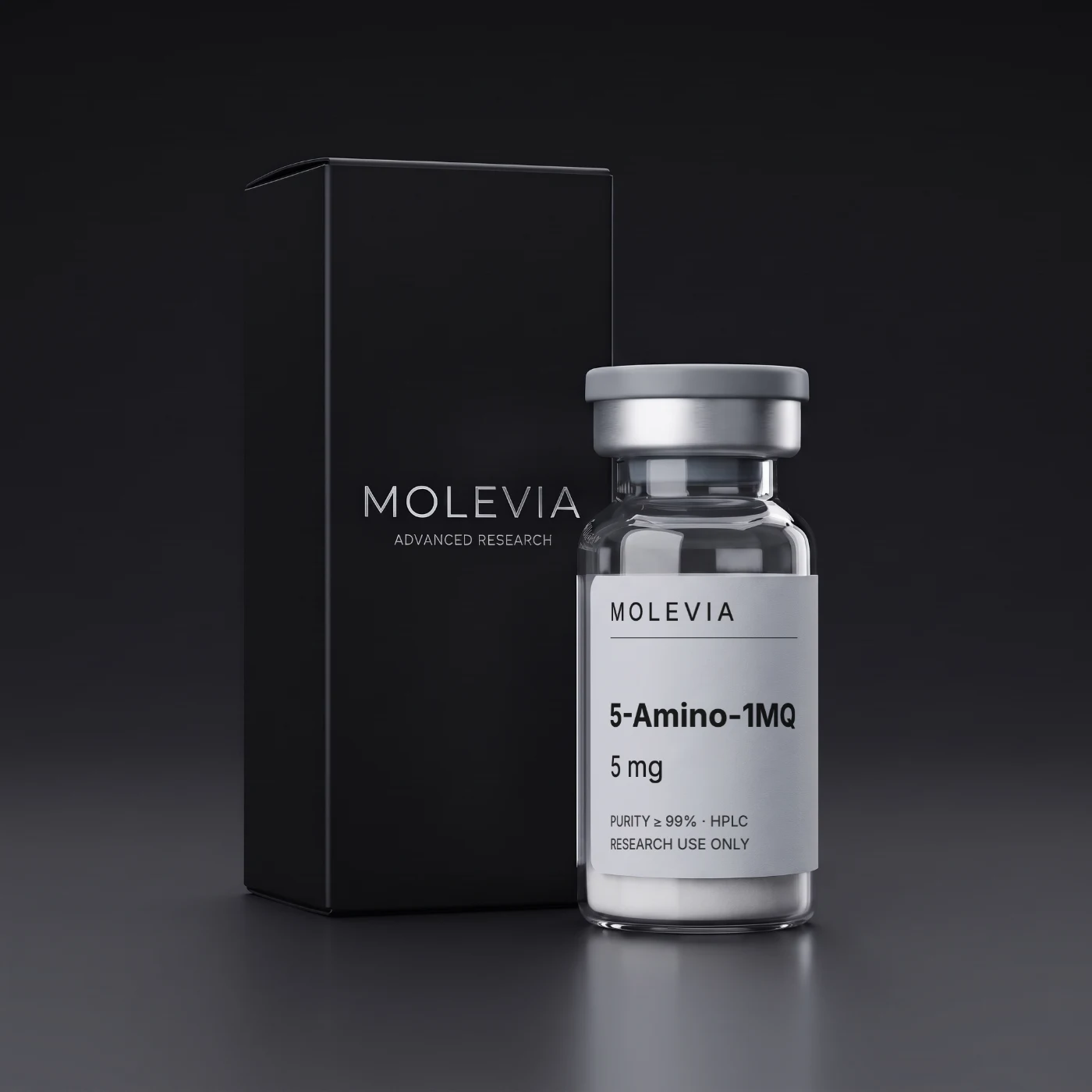
5-Amino-1MQ: research overview
5-amino-1MQ is a small compound sold as a research reagent in 5, 10 and 50 mg sizes. Each lyophilized batch tests at ≥ 99% purity by HPLC, so you know exactly what you are working with before the first experiment.
What is 5-amino-1MQ
5-amino-1MQ is a small, synthetic molecule derived from quinoline. Its name describes the structure: a quinoline ring with a methyl group on the ring nitrogen (position 1) and an amino group at position 5. The compound is not isolated from biological material. It is prepared by chemical synthesis, which allows its composition and purity to be controlled.
A simple, well-defined structure matters in research. Every batch is the same molecule meeting the same purity threshold of ≥ 99%, which makes experiments easier to repeat and results from different batches easier to compare.
Mechanism described in research
The mechanism most often described for 5-amino-1MQ is inhibition of nicotinamide N-methyltransferase (NNMT). This enzyme transfers a methyl group from S-adenosylmethionine (SAM) to nicotinamide, one form of vitamin B3. NNMT is especially active in adipocytes, the fat cells of adipose tissue, which is why it draws attention from researchers studying the metabolism of these cells.
Studies in cell models of adipocyte metabolism have described how blocking NNMT shifts the balance of SAM and nicotinamide inside the cell. That shift affects pathways where methylation reactions play a central role. These observations point the direction for further experiments. They are not settled conclusions.
Research areas
- NNMT enzymology and mechanisms of enzyme inhibition
- adipocyte metabolism in cell culture models
- nicotinamide and S-adenosylmethionine (SAM) balance
- methylation reactions in in vitro systems
- comparison of metabolic pathways in controlled experiments
Product specifications
| Parameter | Value |
|---|---|
| Name | 5-amino-1MQ |
| Chemical class | quinoline derivative |
| Research category | metabolic research |
| Research target | NNMT enzyme |
| Form | lyophilized powder |
| Purity | ≥ 99% (HPLC) |
| Mass confirmation | MS |
| Available sizes | 5 mg, 10 mg, 50 mg |
| Intended use | research reagent, Research Use Only (RUO) |
Working in the laboratory
Storage and reconstitution
- Lyophilized powder: store at -20 °C, tightly sealed and protected from light. Let the vial reach room temperature before opening it.
- After reconstitution: keep the solution at 2-8 °C.
- Freezing: avoid repeated freezing and thawing.
- Solvent: in laboratory work, bacteriostatic water is the solvent most often used. Acetic acid is sometimes used as an auxiliary solvent, depending on the study protocol.
Orders from 50 EUR (40 GBP, 55 USD) that include a vial receive 10 ml of bacteriostatic water free of charge. Calculate the concentration of your solution in our concentration calculator before you plan a series of experiments.
Batch quality
Every batch undergoes HPLC purity analysis with a result of ≥ 99%. Mass is confirmed by MS analysis.
Note the batch number, the HPLC purity and the MS result in your laboratory notebook. This keeps data from different series comparable and makes your documentation complete.
Related products
- MOTS-c, a mitochondrial peptide studied in metabolic models
- SLU-PP-332, a compound used in cellular metabolism research
- AICAR, an AMPK pathway activator used in metabolic research
Browse the full metabolic research category, review our quality standards and work out concentrations in the concentration calculator.


