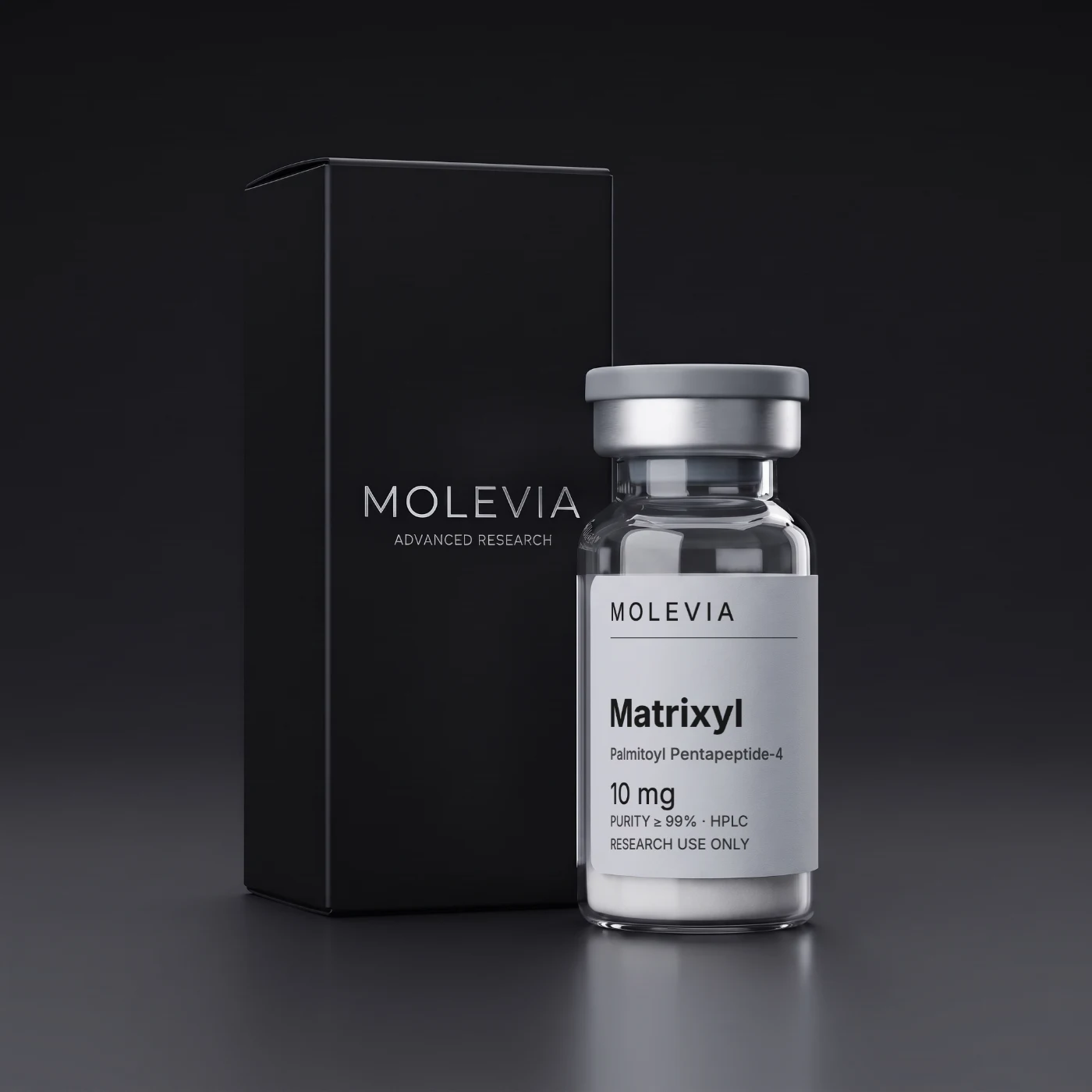
Matrixyl (Palmitoyl Pentapeptide-4): research overview
Matrixyl is a palmitoylated pentapeptide known in the literature as palmitoyl pentapeptide-4. Five amino acids are joined to a palmitic acid chain, which makes this lipopeptide a popular choice in skin research models. We supply it as a research reagent (Research Use Only) in a 10 mg size.
What is Matrixyl
Matrixyl carries the sequence Pal-KTTKS. The KTTKS fragment comes from the type I collagen chain, and the palmitic acid attached at the N-terminus increases the lipophilicity of the molecule. This modification makes the compound a frequent subject of models that study how peptides cross cell membranes.
Mechanism described in research
In vitro studies have described the effect of Matrixyl on fibroblasts, the cells responsible for producing the extracellular matrix. According to the published data, the peptide stimulates the synthesis of type I collagen and other matrix components, the proteins that build the structure of connective tissue. These observations come from cell cultures and skin models.
Research areas
- Type I collagen synthesis in fibroblast cultures
- Extracellular matrix remodelling in in vitro models
- Skin ageing models built on cell cultures
- The effect of lipid modification on peptide penetration across membranes
- Comparative studies with other skin peptides, for example GHK-Cu
Product specification
| Parameter | Value |
|---|---|
| Name | Matrixyl (palmitoyl pentapeptide-4) |
| CAS number | 214047-00-4 |
| Formula | C39H75N7O10 |
| Molecular weight | 802.1 g/mol |
| Sequence | Pal-KTTKS |
| Form | lyophilized powder |
| Purity | ≥ 99% (HPLC) |
| Available sizes | 10 mg |
Working in the lab
Storage
- Keep the lyophilized powder at -20 °C, tightly closed, away from light and moisture.
- Once reconstituted, keep the solution at 2-8 °C.
- Avoid repeated freezing and thawing. Divide the solution into smaller aliquots before freezing.
Dissolving and reconstitution
Bacteriostatic water is the main solvent in laboratory work. The palmitoyl chain limits solubility in water, so for the first reconstitution follow your laboratory protocol. Diluted acetic acid is used as an auxiliary solvent, because it protonates the lysine residues and improves dissolution of the peptide. You can calculate the volumes you need with our concentration calculator.
Batch quality
Every batch is tested by HPLC, which confirms purity of at least 99%. MS analysis confirms the molecular mass of 802.1 g/mol.
Ordering and shipping
Orders placed by 2 pm on working days ship the same day. In Poland, InPost parcel lockers deliver the next working day, and DPD delivers across Europe in 2-4 working days to 29 countries. Shipping is free from 75 EUR, 65 GBP, 80 USD. Quantity discounts apply automatically: 2 vials save 5%, 3 vials save 10%, and 5 vials save 15%. Pay online by card, Apple Pay, Google Pay or BLIK (PLN only).
Related products
Browse the full skin peptides category, check our quality page, or use the concentration calculator to plan your solution.


